Chair, Wall and Floor: Three Spots for Easy Mobility Breaks
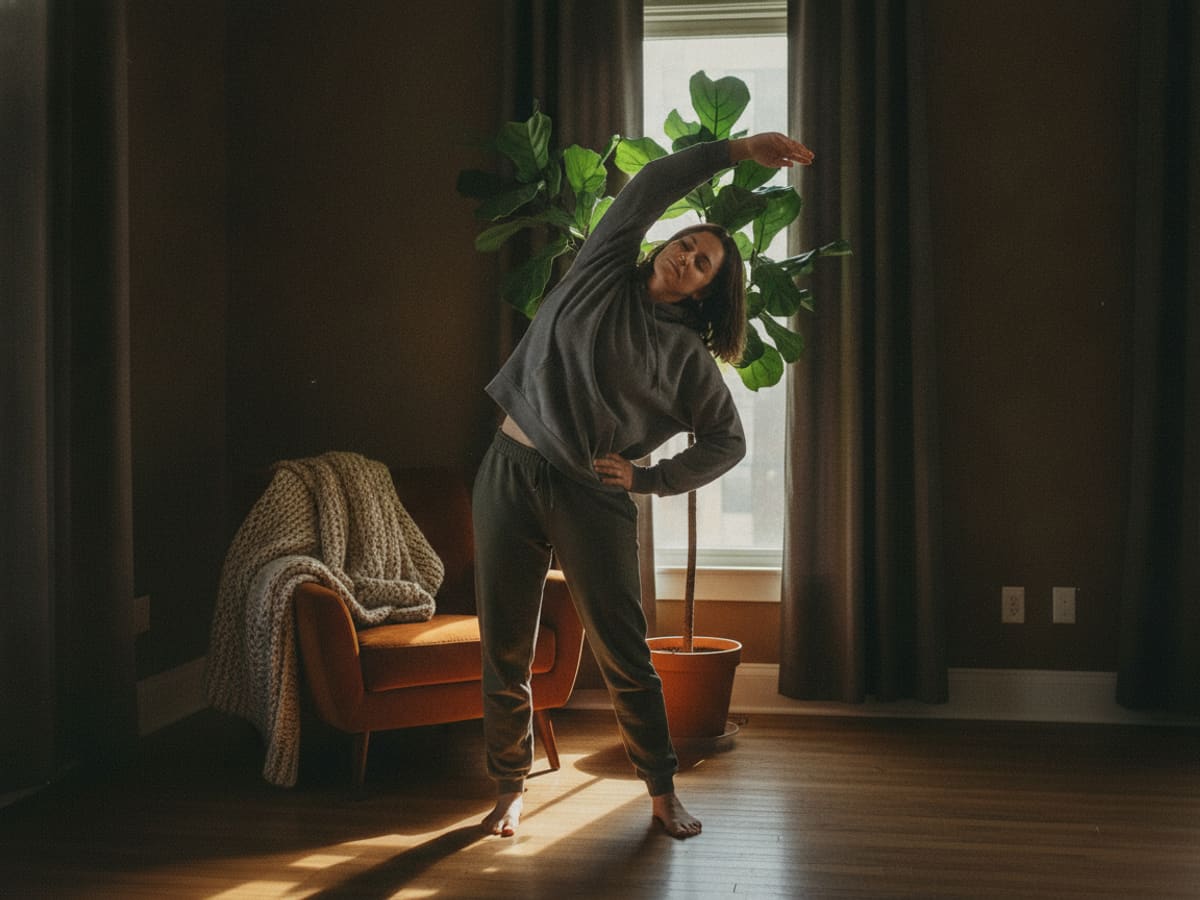
You don't need a gym or special clothes to move your body in small ways. This Guide gives you gentle options you can do in any room, using only a chair, a wall and a bit of floor.
Why short breaks are worth taking
Most of us sit for long stretches without noticing. A morning of emails turns into an afternoon of meetings, and suddenly it's evening and your body feels like it's been parked.
Short movement breaks are a simple way to interrupt that. They don't need a gym, a mat, or special clothes. A minute or two, a few times a day, gives your joints a chance to move through their range and gives your attention a small reset.
The idea here is easy: use three spots you already have. A chair, a wall and a patch of floor. Each one offers a different kind of support, so you can pick what suits your energy, your space and your day.
The chair: seated movements to loosen up
The chair is the easiest place to start, especially at a desk or in a waiting room. Sit toward the front of the seat with your feet flat on the floor and your back tall but not stiff.
Try any of these, moving slowly and breathing normally:
- Shoulder rolls: lift your shoulders toward your ears, roll them back and down, and repeat several times. Then reverse the direction.
- Neck turns: look gently over one shoulder, pause, then turn to the other side. Keep your chin level and stay within a comfortable range.
- Seated cat-cow: place your hands on your knees. Round your back and let your head drop, then lift your chest and look forward. Move with your breath.
- Ankle circles: lift one foot slightly and draw slow circles with your toes. Switch directions, then switch feet.
- Seated twist: sit tall, place one hand on the opposite knee, and turn your upper body gently toward the back of the chair. Go only as far as feels easy.
The wall: standing support for balance and posture
A wall gives you something steady to lean on or reach toward. It's useful when you want to stand and move but would like a little extra stability.
Here is a simple sequence to try:
- Stand with your back against the wall, feet a few inches out in front of you. Let your head, shoulders and hips rest lightly against it.
- Take a few slow breaths and notice how your body is stacked. Many people find this a helpful check-in on posture.
- Slide your arms up the wall to about shoulder height, elbows bent, if that feels comfortable. Lower them slowly. Repeat a few times.
- Turn to face the wall, place both hands on it, and step back until your arms are mostly straight. Gently bend one knee, then the other, as if marching in place.
Another easy option is the wall push-up, which means standing an arm's length from the wall and bending your elbows to lean in, then pressing back out. Keep your movements smooth and don't force anything.
If balance is a concern, stay close to the wall and keep a hand on it as you move. Wear shoes or socks with good grip, and make sure the floor is dry and clear.
The floor: slow, comfortable stretches
The floor works best when you have a few quiet minutes and no trouble getting down and up again. A carpet, rug or folded blanket can make it more comfortable. If getting to the floor feels difficult, skip this section and stick with the chair and wall.
Some gentle options:
- Knee rocks: lie on your back with knees bent and feet flat. Let both knees fall slowly to one side, then the other, keeping your shoulders relaxed.
- Hug and release: bring one knee toward your chest with both hands holding it loosely, then lower it. Switch sides.
- Child's pose: kneel, sit back toward your heels, and rest your arms forward or beside you. Breathe slowly. If your knees complain, place a cushion between your calves and thighs or skip this one.
- Gentle bridge: with knees bent and feet flat, press into your feet and lift your hips a little way, then lower with control.
Move slowly, and stay in each position only as long as it feels pleasant. A stretch should feel like mild tension, not pain.
How to pace yourself and when to skip a move
You don't have to do everything in one go. Choose two or three movements and repeat them a few times across the day. Variety helps, but consistency matters more than doing it all.
A few guidelines keep things comfortable:
- Start small. A minute is plenty, and you can add time as it feels right.
- Breathe steadily. If you find yourself holding your breath, ease off.
- Stop if something hurts. Sharp, pinching, burning or radiating sensations are a signal to skip that move.
- Stop if you feel dizzy, lightheaded or unwell, and sit down.
- Notice how you feel afterward. Some days your body will want more movement and some days less, and both are fine.
It's also okay to modify. Make the motion smaller, use more support, or switch to a different spot. Nobody is grading your form.
Checking with your doctor if you have concerns
For most people, gentle movement breaks are a low-key addition to the day. Still, everyone's body is different, and some situations call for personalized advice.
Once you have the go-ahead, keep it simple. Pick one spot, try one move, and see how it feels. A chair, a wall and a bit of floor are enough to get started.